
-
 Enslaved African-Americans in Texas didn’t learn they’d been freed until weeks after the Civil War officially ended — when Union General Gordon Granger arrived in Galveston to break the news.
 -
 Dogs have long stood beside us, not just in life, but in art as well. In a new book, cultural historian Thomas Laqueur explores why dogs, more than any other animal, so often figure in the way we picture ourselves.


-
 Lewis and Clark’s expedition is the stuff of American legend. Craig Fehrman’s new book highlights the people who helped make the journey possible.
 -
Lewis and Clark’s expedition is the stuff of American legend. Craig Fehrman’s new book highlights the people who helped make the journey possible.
-
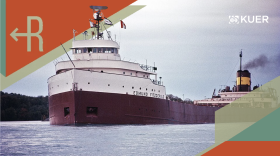 As big freighters go, the Edmund Fitzgerald was the biggest, the best and the most profitable ship on the Great Lakes. Then, on Nov. 10, 1975, facing gale-force winds and 50-foot waves, the ship sank, taking all 29 men aboard her down into the icy depths of Lake Superior.
 -
 With Easter weekend approaching, we’re revisiting our 2025 conversation with Elaine Pagels about the real Jesus of Nazareth.
 -
With Easter weekend approaching, we’re revisiting our 2025 conversation with Elaine Pagels about the real Jesus of Nazareth.
-
 The Wild West has been the subject of much mythologizing in American culture. But for all the fantasy, at least one figure was real: the gunfighter.
 -
 It may seem like Mars is just a modern-day obsession, but we earthlings were nuts for the Red Planet more than a century ago. David Baron’s new book tells the story.
 -
 What weighs five pounds, hasn’t been seen in print for 20 years, but still shapes the way we think about language? Merriam-Webster’s Collegiate Dictionary — and author Stefan Fatsis is here to tell us why it matters.
 -
 In 1856, Mary Ann Patten became the first woman to captain an American merchant vessel. She was only 19 years old. Historian Tilar Mazzeo’s book tells the remarkable story.
 -
In 1856, Mary Ann Patten became the first woman to captain an American merchant vessel. She was only 19 years old. Historian Tilar Mazzeo’s book tells the remarkable story.


